
HORIZON RIO IMOBILIARIA LDTA
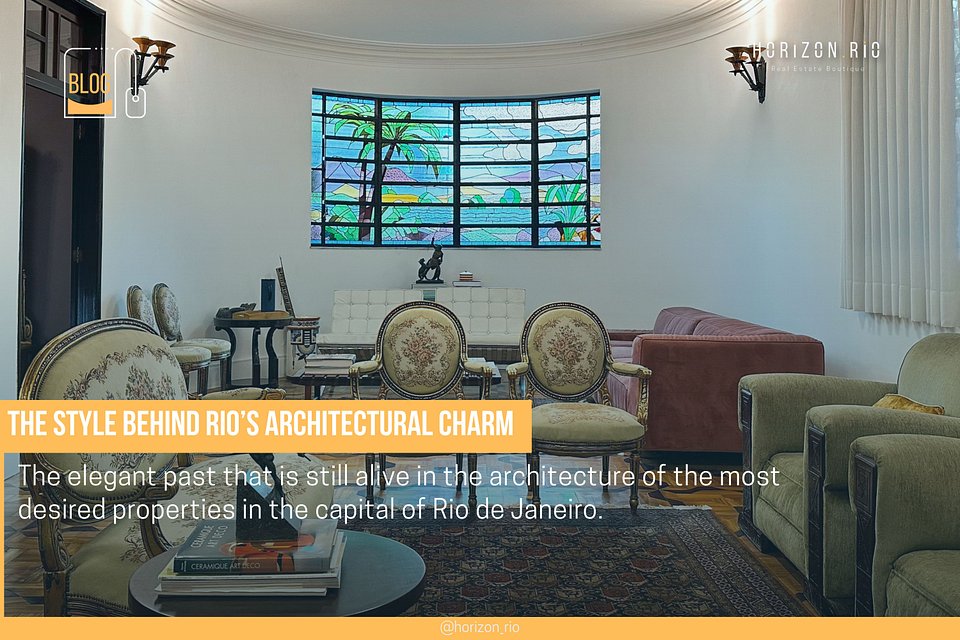
Art Deco in Rio de Janeiro: living heritage in every corner of the city
Art Deco is not just an aesthetic: it is an elegant pulse that runs through the streets of Rio, revealing a city shaped by French influences, modern desires, and architectural tropicalism.
In Rio de Janeiro, this European-born style echoes in building facades, winding railings, rounded balconies, and geometric elements. It blends with the lush natural landscape, creating a look that is simultaneously international and deeply Carioca.
An influence that begins in Paris and ends at Corcovado
In the early 20th century, Mayor Pereira Passos promoted a major urban reform in Rio, inspired by the Haussmannian Paris model. Streets were widened, boulevards emerged, and with them also arrived a new architectural language: monumental, symmetrical, and decorative. It was the ideal setting for Art Deco to flourish here.
The French presence was significant. Names like Grandjean de Montigny and Joseph Gire (architect of the Copacabana Palace) helped establish a new visual standard for the city. A European aesthetic that began to intersect with Rio's geography and lifestyle.
Rio's Tropicalized Art Deco
Unlike other capitals in the world, Rio reinvented Art Deco here, the style came to life with indigenous motifs, tropical plants, marine elements, stained glass, and colorful coverings. It was a fusion of European sophistication and Brazilian visual identity, marked by exuberance and symbolism.
Where Art Deco pulsates with strength
South Zone: Copacabana, Leme and Flamengo
Rio's South Zone boasts some of the most iconic examples of Art Deco architecture, especially in the Lido, a prime stretch of Copacabana, one of the highest densities of buildings of this style in Brazil is found. Buildings such as Itaoca (1928), Itahy (1930) and Guahy (1932) display indigenous-inspired mosaics, aerodynamic shapes, curved balconies and decorative elements that preserve their original integrity to this day.
The Flamengo also houses realjewelryof the style, with buildings that maintain ornate entrances, iron and marble staircases, stained glass windows and other details that reinforce the modernist spirit of the period.
Santa Teresa: bohemianism and historical sophistication
On top of the hills, Saint Teresa reveals a more intimate side of Art Deco. Houses like the one on Rua Teresina, built in 1928, preserve original decorative elements such as stained glass, fine wood floors, detailed ironwork, and geometric wall coverings. Also noteworthy is the Navio House, nicknamed for its resemblance to the bow of an ocean liner—a reference to the streamline style of Art Deco, which drew inspiration from the forms of speed and technology.
The neighborhood, once a stronghold of Rio's aristocracy, is today a synthesis of tradition and reinvention, keeping alive the elegance of the 1920s and 30s with a contemporary artistic atmosphere.
Centro and Cinelândia: the monumental everyday life
Rio's downtown area was also deeply influenced by Art Deco. The Central do Brasil Station, with its clock tower and geometric shapes, is a clear symbol of the period's architecture. Other examples include the former Mesbla building, the Carlos Gomes Theater, the Cinelândia cinemas, and the Duque de Caxias Palace, all characterized by marble staircases, decorative reliefs, angular windows, and symmetrical facades.
Christ the Redeemer: the pinnacle of Art Deco architecture
The Christ the Redeemer, besides being a symbol of the city, is also considered the largest Art Deco monument in the world. Designed by Heitor da Silva Costa in collaboration with French sculptor Paul Landowski, it perfectly embodies the principles of the style: geometry, monumentality, and integration with the surroundings.
Why this matters for those looking for a property in Rio?
Beyond aesthetic beauty, Art Deco carries cultural, heritage, and symbolic value. Properties featuring this style offer more than just location or square footage. They deliver authenticity, history, and an unparalleled aesthetic experience.
At Horizon Rio, we value architecture with identity. Our portfolio includes properties that preserve the original characteristics of the Art Deco style, carefully restored to offer contemporary comfort without sacrificing the spirit of the period.
Do you want to live in a property with history?
If you are looking for a property that combines style, authenticity and historical value, speak to a specialist at Horizon Rio we have unique opportunities in neighborhoods like Copacabana, Flamengo, and Santa Teresa, with properties that are true architectural expressions of a golden age.